Serving Raleigh & Wake CountyMon–Fri 7am–5pm · Free written estimates

roof repair Raleigh NC

Roof Repair in Raleigh, NC for Leaks, Storm Damage & Aging Roofs

A roof leak rarely begins directly above the ceiling stain. We trace water paths across shingles, fasteners, underlayment, flashing, roof-to-wall intersections, and attic ventilation before recommending a repair.

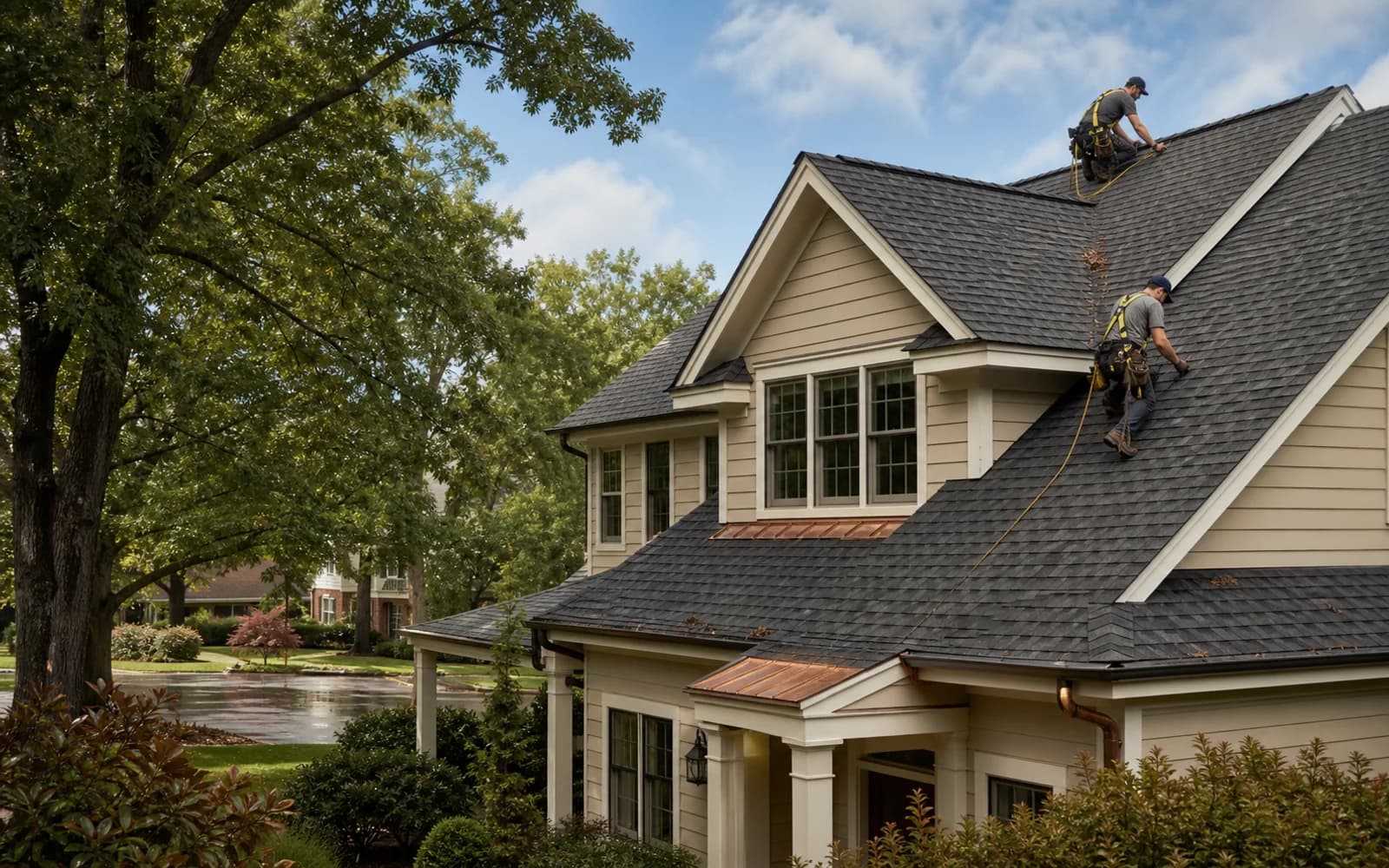
Raleigh roofing crew working safely on an architectural shingle roof
1–2 daysTypical repair window2:12+Repairable roof slopePromptStorm triage

System-level service

Roof Repair that accounts for the whole roof

Good roofing work connects field materials to edges, transitions, penetrations, ventilation, drainage, structure, and the property below.

01

Leak diagnosis before materials

Water can travel several feet along decking or a rafter before becoming visible indoors. Our assessment starts uphill from the symptom and includes penetrations, valleys, step flashing, counterflashing, pipe boots, ridge vents, and previous repair zones.

  • Moisture-path tracing
  • Attic and deck observations
  • Photo-documented findings
02

Repairs matched to the existing assembly

A durable repair must work with the roof already in place. We identify the shingle profile, metal gauge, membrane type, fastener pattern, and sealant compatibility so the new work does not create a weak transition.

  • Architectural and three-tab shingles
  • Standing-seam and exposed-fastener metal
  • TPO, EPDM, and modified bitumen
03

Storm damage and emergency dry-in

Wind can lift seal strips, crease tabs, loosen ridge caps, and drive rain behind wall flashing. When permanent work must wait, temporary tarping or a controlled dry-in helps limit additional water entry.

  • Wind-lift and hail observations
  • Temporary weather protection
  • Repair-versus-replace guidance

Materials & methods

Details selected for the assembly

Compatibility, exposure, roof geometry, installation method, and manufacturer requirements guide material selection.

01

Flashing metals

Galvanized steel, aluminum, and copper are selected by exposure, existing materials, and corrosion compatibility—not appearance alone.

02

Roofing sealants

ASTM-rated polyurethane or roof-specific elastomeric sealants are used at appropriate joints; general-purpose caulk is not treated as a roof system.

03

Replacement shingles

Color is only one factor. Profile, exposure, thickness, and seal-strip placement must align with the installed field.

From concern to scope

What to expect from the assessment

We begin with the symptoms and property context, then work through the roof in a repeatable order. Findings are explained in plain language so you can compare the proposed work—not just the final number.

  1. 1Property context Age, known history, prior repairs, interior symptoms, access, and project goals.
  2. 2Roof observations Field condition, edges, flashings, penetrations, drainage, ventilation, and transitions.
  3. 3Written options Recommended work, materials, assumptions, exclusions, cleanup, and concealed conditions.

Service questions

Roof Repair FAQ

Use these answers to prepare for an assessment and compare written recommendations.

Can a leaking roof be repaired without replacement?+

Often, yes. Isolated flashing, boot, fastener, or shingle failures may be repairable when the surrounding deck and field remain serviceable.

How quickly should I address a ceiling stain?+

Promptly. Even a small stain can indicate wet insulation or deck deterioration. Protect belongings, document the area, and arrange an assessment.

Will you repair storm damage?+

Yes. We can document visible conditions, stabilize active entry points, and provide a written scope. Your insurer determines coverage.

How long does a roof repair last?+

Service life depends on the surrounding roof, failure cause, and material match. The goal is an integrated repair, not a surface patch.

A clear next step

Get a roof plan that makes sense before the work begins.

Start with a straightforward conversation, documented findings, and a written estimate—without pressure or vague allowances.